About Die casting vs sand casting
Die Castings are precision metal components manufactured by injecting molten metal under high pressure into hardened steel dies. This process produces parts with excellent dimensional accuracy, smooth surface finishes, and consistent quality, making die castings ideal for high-volume production. Common materials include aluminum, zinc, and magnesium alloys, and they are widely used in the automotive, electrical, electronics, and industrial equipment sectors.
Sand Castings are produced by pouring molten metal into molds made from specially prepared sand
Unlock sensational manufacturing value with our Special Rate Die Casting vs. Sand Casting solutions. Gain unrivaled precision with die casting, supporting impeccable dimensional tolerance (up to 0.1 mm) perfect for high-volume, complex parts. Experience competitive clearance pricing on sand casting for access to economical, limited-run, or large-size components. Whether as a manufacturer, service provider, or supplier in India, our expertise guarantees impeccable quality and service. Benefit from our comprehensive access to both methods, ensuring your production demands are met with accuracy and efficiency for every industry segment.
Die Casting vs. Sand Casting: Competitive Edge & Usage
Die casting offers impeccable competitive advantages for high-volume manufacturing with unrivaled accuracy and sensational design capabilities, making it ideal for automotive, electronics, and appliance industries. Sand casting, in contrast, excels for general and specific usage where parts are large, or volume is low to medium. Its cost-effective, flexible nature suits heavy machinery and construction demands, supporting straightforward or moderately complex parts. Both methods offer clear access paths catering to diverse manufacturing needs across various industries.
Main Export Markets, Delivery & Payment for Casting Services
Our expertly crafted casting goods are dispatched globally, with main export markets in Europe, Southeast Asia, the Middle East, Africa, and North America. Leveraging strategic goods transport networks, we estimate timely delivery with streamlined customs support to meet client schedules. Payment terms are flexible, offering trusted options like LC and TT, ensuring seamless business interactions. Clients gain access to prompt service, accurate lead-time estimates, and reliable delivery for all casting orders, regardless of size or complexity.
FAQ's of Die casting vs sand casting:
Q: How does die casting differ from sand casting in terms of tolerance capability?
A: Die casting achieves much tighter dimensional tolerances, up to 0.1 mm, which results in parts with greater precision. In comparison, sand casting generally provides tolerances around 0.8 mm or more, making it better suited for components where extreme precision is not critical.
Q: What types of materials are commonly used in die casting and sand casting?
A: Die casting typically utilizes non-ferrous metals such as aluminum, magnesium, and zinc due to their ability to flow under pressure. Sand casting supports a broader material range, including ferrous metals like iron and steel, alongside non-ferrous options like bronze, brass, and aluminum.
Q: When should I choose die casting over sand casting for my project?
A: Die casting is recommended when a project requires high-volume production of small to medium-sized parts with complex shapes and tight tolerances. Consider sand casting if you need large components, operate on a limited budget, or need only a short production run without strict dimensional accuracy.
Q: Where are die casting and sand casting most commonly applied?
A: Die casting is widely used in sectors such as automotive, electronics, and household appliances. Sand casting predominates in industries like heavy machinery, construction, and valve manufacturing, where larger and less intricate parts are frequently required.
Q: What is the process difference between die casting and sand casting?
A: Die casting involves injecting molten metal under high pressure into reusable metal dies, resulting in smooth-surfaced, finely detailed parts. Sand casting pours molten metal into a sand mold formed from a pattern, which is more adaptable to various shapes and sizes but yields a rougher surface.
Q: How does delivery time estimate differ between die casting and sand casting?
A: Die casting generally requires a longer lead time due to die fabrication but supports faster high-volume production once dies are ready. Sand casting offers shorter mold preparation times and is ideal for prototyping or urgent small-batch needs, often enabling quicker initial dispatch.

 Call Us:- 08045800030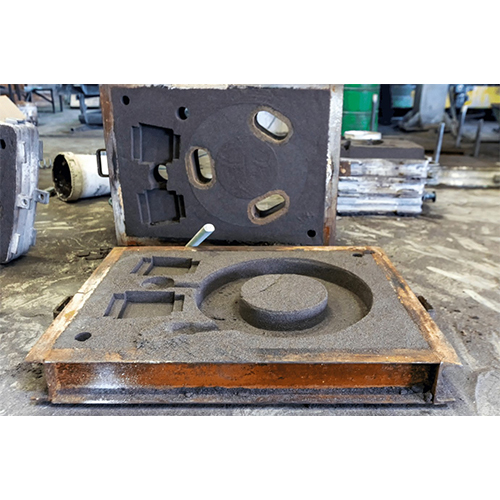






 Get A Quote
 Send Inquiry

 Send Inquiry
 Send SMS


